

Bulk packaging sounds simple until one material has to protect thousands of products consistently. A foam sheet that performs well for a small shipment may not necessarily suit large-scale industrial handling, long-distance transportation, or repeated production cycles. When sourcing Packaging Foam in bulk, buyers need to consider more than the price per sheet. Density, thickness, compression resistance, dimensions, surface quality, customization, and supply capacity can all affect the final packaging performance. Getting these details right can also prevent unnecessary material use and costly product damage. Samad Foam understands that industrial packaging requirements vary from one application to another, making specification-led sourcing especially important. In this blog, we are going to explain what buyers should evaluate before ordering protective foam sheets in bulk.

The first sourcing mistake is choosing the foam before understanding what it needs to protect. A lightweight consumer product will have different requirements from machinery components, electronics, automotive parts, or fragile equipment.
Consider the product's weight, dimensions, surface sensitivity, and vulnerability to impact. Think about how it will be handled during loading, transportation, storage, and unloading. This information gives suppliers a practical starting point for recommending suitable foam characteristics.
Thickness gets plenty of attention, but it does not tell the whole story. Two sheets with identical thicknesses can behave differently if their densities vary.
Higher density may provide greater structural support in certain applications, while additional thickness can increase cushioning space. The ideal combination depends on the product and expected handling conditions.
Samad Foam can help buyers assess foam specifications based on the intended packaging application instead of simply selecting the thickest available sheet.
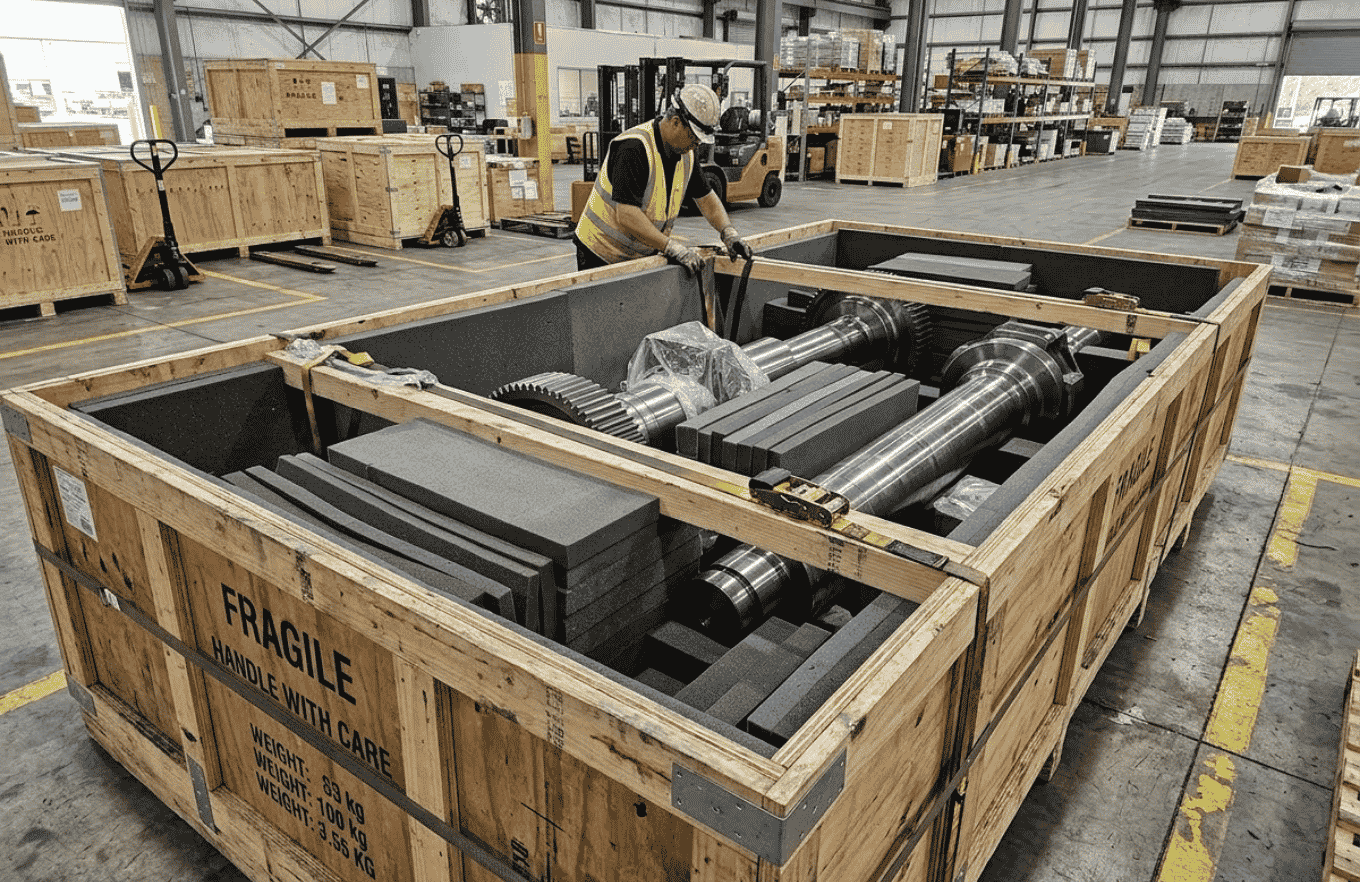
Industrial packaging can face repeated pressure during stacking and transportation. If protective material compresses too easily, the product may eventually lose the cushioning it needs.
Ask about compression behavior and how the material performs under expected loads. For products that are particularly sensitive to shock, consider whether the foam can absorb impact without permanently deforming too quickly.
Moreover, packaging should account for the real journey of the product rather than only the conditions inside the warehouse.
Buying standard sheets may seem straightforward, but excessive cutting can create unnecessary waste and labor. For high-volume operations, those small inefficiencies can add up quickly.
Ask whether the supplier can provide specific sheet dimensions, thicknesses, colors, or converted formats. Custom sizing may improve material utilization and simplify your packaging workflow.
In Europe, businesses managing large production volumes may also need specifications that integrate with existing automated or semi-automated packaging processes. Samad Foam offers international foam solutions that can be considered for such requirements.
Sustainability is increasingly becoming part of procurement decisions, particularly for businesses shipping large volumes of products. Material selection should therefore consider both protective performance and resource use.
Recycled Foam can be appropriate for certain applications when its physical properties match the required level of protection. However, choosing recycled content should not mean overlooking durability or product safety.
A damaged product can generate additional packaging, return transportation, and replacement costs. Most importantly, buyers should consider the complete packaging cycle rather than judging sustainability through one material characteristic alone.

A low unit price can become less attractive when inconsistent dimensions, limited capacity, long lead times, or excessive waste enter the equation.
Before placing a bulk order, ask about minimum order quantities, production capacity, quality checks, lead times, repeat-order consistency, and customization capabilities. Also request samples where possible and test them under realistic packaging conditions.
Samad Foam can work with buyers to discuss specifications before larger-volume requirements are finalized, helping procurement teams evaluate the material according to the application.
Bulk sourcing works best when purchasing and production schedules are connected. Ordering too little can create shortages, while ordering too much can consume valuable storage space and tie up working capital.
Review your average monthly usage, seasonal demand, storage capacity, and expected production changes before deciding the order quantity. In the USA, businesses sourcing internationally should also factor transportation timelines into inventory planning.
Samad Foam serves international markets, allowing businesses to discuss packaging requirements with a supplier that understands the importance of specification and supply planning.
Sourcing industrial protective foam in bulk requires a broader view than comparing prices per sheet. Product characteristics, density, thickness, compression behavior, customization, sustainability, supplier capacity, and delivery planning all influence the final value of an order. The goal is not simply to purchase more material, but to select the right specification for consistent protection and efficient packaging operations. Samad Foam can support businesses in evaluating foam requirements according to their applications and production needs. With careful planning before ordering, bulk procurement can become more predictable, efficient, and cost-conscious.
Contact Samad Foam today for bulk foam sourcing, customized specifications, material guidance, and packaging solutions designed around your industrial requirements and budget.
Businesses should evaluate thickness, density, compression performance, dimensions, product fragility, customization options, quality consistency, minimum quantities, lead times, and storage requirements.
Recycled Foam can suit selected industrial packaging applications when its density, cushioning performance, and physical properties meet the protection requirements of the product.
Companies can reduce waste by matching sheet dimensions to product requirements, considering custom sizing, optimizing cutting patterns, and selecting a foam specification that avoids unnecessary thickness.


