Choosing an overseas manufacturing partner can open doors to competitive pricing, customized products, and larger production capabilities. However, a promising quotation does not automatically mean a supplier can deliver the quality, consistency, and timelines your business needs. When evaluating Yoga Mat Manufacturers, buyers must look beyond catalogs and polished presentations to understand how production actually works. Material selection, quality controls, customization options, communication, and shipping arrangements can all influence the outcome. A small oversight during supplier selection may lead to inconsistent batches, delayed launches, or unexpected costs. To help buyers make smarter sourcing decisions, in this blog, we are going to explore the key checks that can separate a suitable OEM partner from a risky purchasing decision.
Start by confirming whether the supplier manufactures products directly or outsources significant parts of production. This distinction matters because additional production partners can affect quality control, communication, and lead times.
Ask about production capacity, available equipment, minimum order quantities, sampling procedures, and experience handling orders similar to yours. A supplier should be able to explain its process clearly rather than offering vague assurances.
Request product samples, factory information, and relevant examples of previous work. If possible, arrange a virtual or in-person factory assessment before committing to a substantial order.

A yoga mat's quality begins with its materials. Different formulations provide different combinations of cushioning, grip, flexibility, weight, and durability, so buyers should define their product requirements before requesting quotations.
For example, EVA Foam Material can be suitable for lightweight, cushioned mats, but the correct density, thickness, surface texture, and formulation depend on the intended use. Ask suppliers to explain their material specifications and provide samples for hands-on evaluation.
Check whether the mat retains its shape after repeated rolling, provides suitable traction, and feels comfortable during typical exercises. Compare samples against the same criteria so purchasing decisions are based on performance rather than appearance alone.
A good sample is encouraging, but consistent mass production is the real test. Ask how incoming materials, production stages, and finished mats are inspected.
Clarify acceptable tolerances for thickness, dimensions, weight, color, and surface finish. You should also understand how the supplier handles defective products, production errors, and corrective actions.
Most importantly, agree on written product specifications before production begins. This gives both parties a shared reference point when checking finished orders.

OEM projects often involve more than placing a logo on an existing product. You may need custom colors, printed designs, packaging, dimensions, surface patterns, or material combinations.
Discuss the supplier's customization limits, tooling requirements, sampling fees, and approval process. Confirm who owns approved artwork and product designs, and clarify how unauthorized changes will be prevented.
Samad Foam helps businesses assess foam requirements for customized applications, including products where material properties and dimensions need to match specific production goals.
International buyers should understand which product safety, chemical, labeling, and import requirements apply in their destination market. These requirements vary by location and product type, so avoid assuming that one certificate covers every obligation.
Ask for relevant test reports, material documentation, and quality records. Verify that documents match the specific product and manufacturer rather than accepting generic certificates without further checks.
The lowest unit price can be misleading when additional expenses appear later. Evaluate the full landed cost, including samples, tooling, packaging, freight, duties, inspections, and potential rework.
When comparing Yoga Mat Manufacturers, also check payment terms, production lead times, minimum order quantities, and reorder flexibility. In Europe, buyers may need to account for market-specific documentation and delivery arrangements. In the USA, import costs, shipping schedules, and inventory planning can influence the overall purchasing decision.
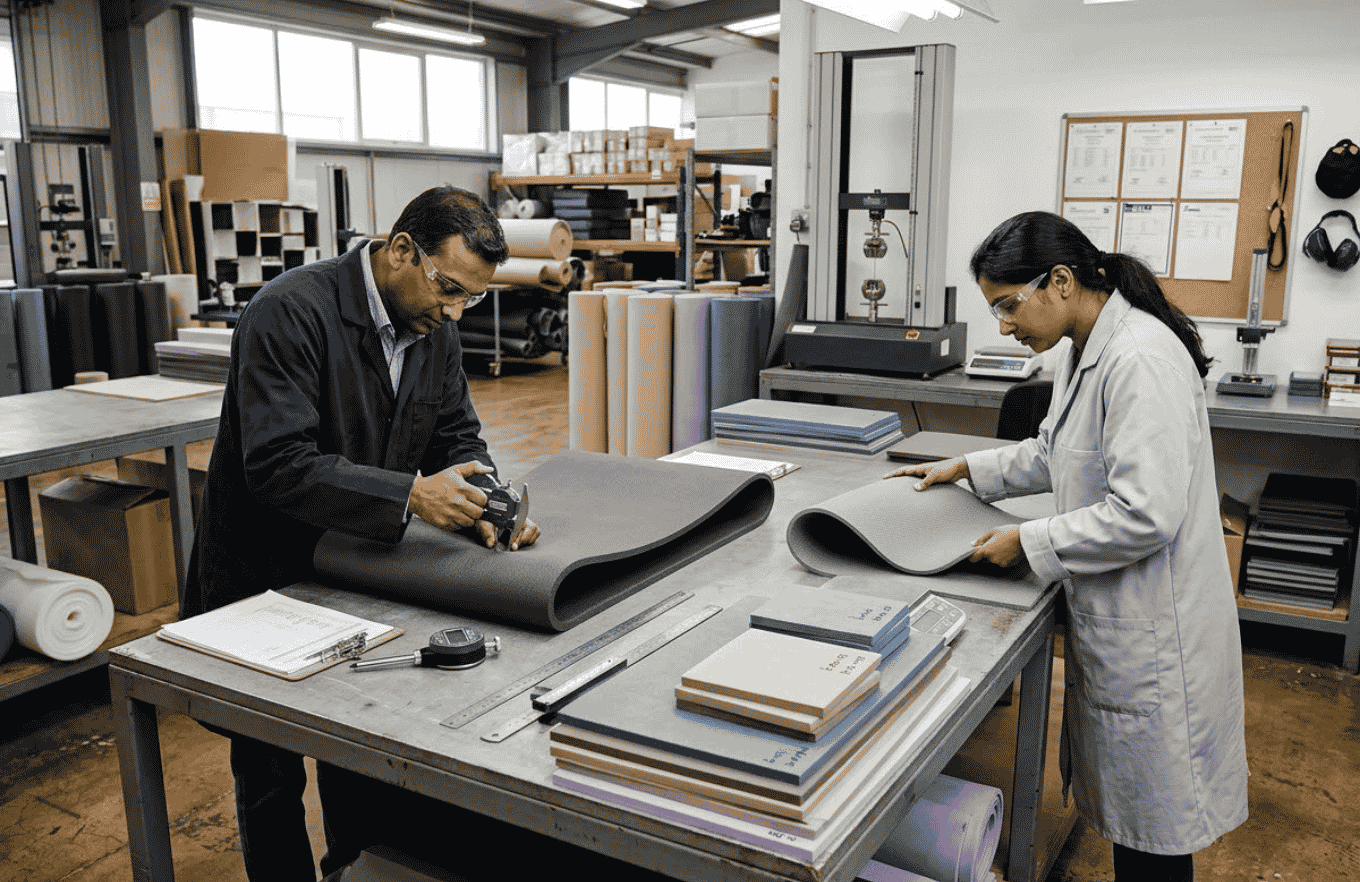
International sourcing involves different time zones, expectations, and working practices. Clear communication can prevent small misunderstandings from becoming expensive production problems.
Check how quickly the supplier responds, whether technical questions receive specific answers, and how changes are documented. Samad Foam supports international material sourcing discussions, helping businesses evaluate foam specifications according to their applications.
Selecting an international OEM partner requires careful evaluation of production capabilities, material quality, testing procedures, customization, documentation, costs, and communication. A supplier that looks attractive on paper still needs to demonstrate that its products meet your specifications consistently. Requesting samples, documenting expectations, and checking relevant records can reduce uncertainty before a large commitment. Whether you are developing a new yoga mat range or expanding an established product line, a structured vetting process helps you make decisions with greater confidence and build a sourcing strategy that supports long-term business goals.
Contact Samad Foam for foam material guidance, customized specifications, product sampling, and international sourcing support tailored to your manufacturing requirements and business goals.
Request samples, review production capabilities, verify business details and relevant documentation, assess quality controls, and agree on written specifications before confirming a large order.
Evaluate density, thickness, flexibility, cushioning, surface grip, durability, and intended usage, then test samples against your product requirements.
Include unit pricing, sampling, tooling, packaging, freight, duties, inspection fees, payment terms, and possible costs arising from defects or production delays.